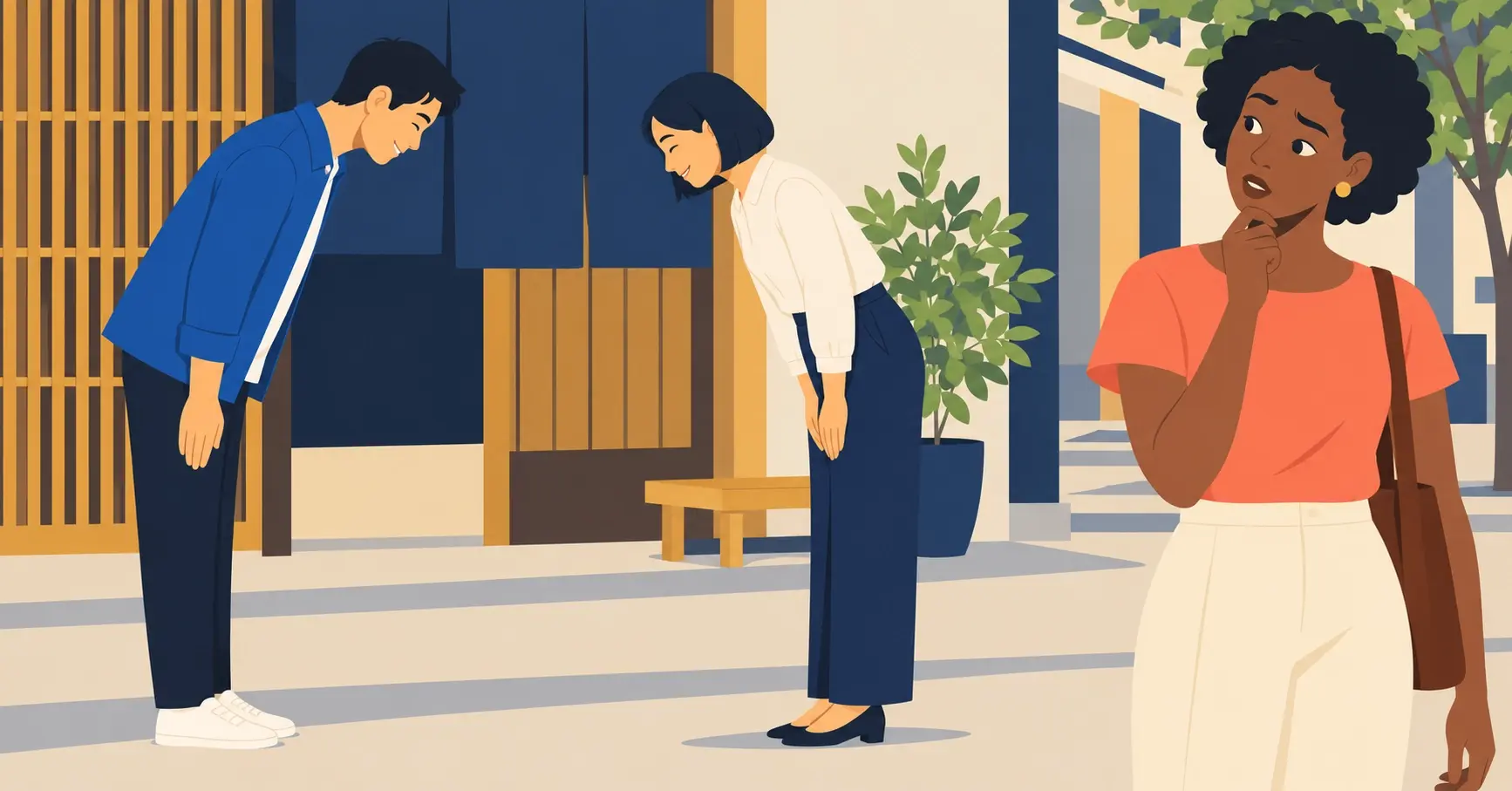

What Surprises Foreigners Most About Japan? Real Visitors Share Their Culture Shocks
A crowded train that’s surprisingly quiet. A shop entrance with its own soundtrack. A convenience-store stop that becomes a memorable part of the trip.
Visitors’ accounts of culture shock in Japan reveal how much surprise comes from everyday situations. Buying lunch or sharing dinner can make you reconsider something you’ve always treated as normal.
There’s no single experience that surprises everyone most. Your hometown, travel experience, and expectations all affect what you notice. These published interviews and firsthand trip reports offer several perspectives—and some useful ideas for your own visit.
- The volume can change dramatically between places
- Small conveniences can steal attention from carefully planned attractions
- Street Interviews: How often do Japanese people eat sushi in a month?
- Dinner can come with a different understanding of whose food is whose
- Sometimes the surprise is how much easier an interaction feels than expected
- Let the surprise become a question
- A New Connection Starts Here.
The volume can change dramatically between places
A couple sharing their trip to Tokyo, Osaka, Nara, and Kyoto on Reddit described being struck by how quiet their packed commuter trains were. Other travelers in the discussion reported hearing ordinary conversations, a useful reminder that even the same setting produces different impressions.
Meanwhile, a British visitor interviewed by LIVE JAPAN in 2020 was surprised by the noise outside shops: speakers, announcements, and staff calling to customers. Compared with the shopping environments he knew, the streets felt remarkably lively.
Both experiences make sense. A train carriage and a shopping district have different expectations.
For the practical part, Japan National Tourism Organization guidance says quiet conversation on trains is acceptable, while phone calls are generally discouraged. You can speak to your travel companion without treating every sentence like a security breach. Keep your voice low and pay attention to the people around you.
A question worth asking a Japanese friend is:
“What sounds remind you of home?”
Their answer could introduce you to a side of Japan you hadn’t thought about listening for.
Our Langmate team brings together Japanese and international members who enjoy travel and making friends. That personal angle matters to us: hearing what someone notices, enjoys, or finds inconvenient gives a place much more character.
To start those conversations before your trip, explore Langmate. The official website explains the app and its features in English.
Small conveniences can steal attention from carefully planned attractions
The couple’s trip report also singled out convenience-store smoothie machines and cabinets keeping canned drinks warm. These were among the discoveries they wanted other first-time visitors to know about.
There’s something rather lovely about crossing an ocean and coming home enthusiastic about a heated beverage cabinet.
You don’t have to share that enthusiasm. But small discoveries can give you an easy way into a conversation. Instead of asking someone to explain Japanese food culture, try:
“What do you buy from a convenience store when you’ve had a long day?”
It’s personal, easy to answer, and leaves room for disagreement. Someone might recommend a dessert. Someone else might tell you they’d rather go straight home and cook.
If you try their suggestion, you have a reason to message again:
“I found the drink you mentioned. You were right about how sweet it is!”
Use your actual reaction. Friendly disagreement is perfectly good conversation material.
Street Interviews: How often do Japanese people eat sushi in a month?
Langmate regularly stops international visitors on the streets of Tokyo and shares their reactions to Japanese culture on Instagram and TikTok.
This time, we tested one of the most common assumptions about Japan:
※From Langmate official Instagram/YouTube
Sushi may be one of the first things people associate with Japan, but that does not necessarily mean Japanese people eat it as often as visitors imagine. When we asked tourists to guess, many were surprised by the answer.
And that is a culture shock in its own way: sometimes the biggest surprises are not about strange customs, but realizing that everyday life in Japan is different from the image you had before coming here.
What would your guess be?
For more real reactions to Japanese culture, watch Langmate’s street interviews on Instagram 🎵
Check Langmate Official Instagram
Dinner can come with a different understanding of whose food is whose
In the same LIVE JAPAN interview, the British visitor recalled being surprised by shared dishes at an izakaya. He was accustomed to ordering his own meal; eating from a selection of dishes with everyone at the table took some adjustment, though he came to enjoy it. That describes his experience, rather than a rule about how British people eat.
JNTO’s dining guidance confirms that sharing dishes and ordering more as the evening continues is common at izakaya and some casual restaurants.
If you’re unsure, a quick “Are we sharing these?” saves you from confidently claiming the entire plate.
Eating with Japanese friends also gives you space to ask small questions as they arise: which dish they recommend, whether something is a personal favorite, or what they usually order with their family.
You can contribute, too. Explain how a shared meal works where you’re from. Negotiating the final dumpling may turn out to be an international concern.
Sometimes the surprise is how much easier an interaction feels than expected
An American traveler writing about a two-week family trip to Tokyo, Osaka, and Kyoto described preparing extensively and worrying about communication. Their account emphasized welcoming encounters: people approached them to practice English and asked where they were from and where they planned to go. They also reported using translation to help with communication.
That is one family’s positive experience. Language barriers and uncomfortable encounters can happen, and another visitor’s difficulties deserve to be taken seriously.
Still, their story gives nervous travelers a useful possibility to hold onto: someone you meet may be curious about you, too.
Learn a few greetings, keep a translation tool available, and allow an exchange to be imperfect. A conversation can be enjoyable even when both people occasionally pause to find a word.
Let the surprise become a question
“People do things differently here” is an observation. “How does this work when you’re out with your friends?” invites someone into the conversation.
You could ask a Japanese friend:
“What surprised you when you traveled abroad?”
Then share something from your own experience. Now both people have a story, and neither has to explain an entire country.
Langmate is available on the App Store and Google Play if you’d like to meet Japanese people online and begin exchanging those stories.
Your first conversation might start with train manners or an unfamiliar snack. Give it a little time, and you may find yourself talking about something neither of you expected.
A New Connection Starts Here.
Discover real life in Japan by talking to locals. Make language exchange and international friendship easier with Langmate.